Blog

  • Introducing SpiralKit

    Introducing SpiralKit

    After several very successful releases of our iPhone handwriting-based notepad application, Spiral by Digital Generalists, we have decided to release the drawing engine for Spiral as an open source framework.

    What Is SpiralKit

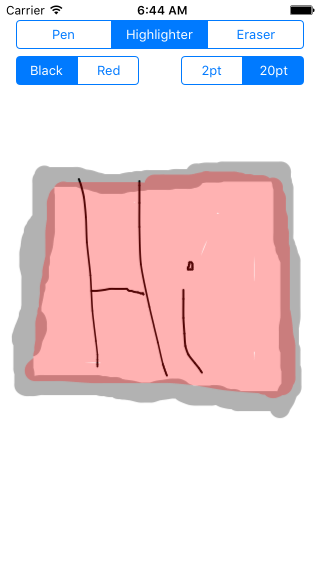
    SpiralKit is a Quartz 2D-based drawing framework for iOS written in Objective-C. The framework enables ‘drawing’ on a UIView in iOS and ships with pen, highlighter, and eraser drawing effects.

    The framework is built specifically to enable new effects, color spaces, and drawing algorithms in a modular fashion. If you want to provide a unique drawing effect, support of the CMYK color space, or a custom drawing algorithm, you can add such features to SpiralKit without having to modify the fundamental components of the framework.

    Where to Find It

    The project is hosted on GitHub at https://github.com/digital-generalists/spiralkit.

    Reference Implementation Usage

    More Information

    See the framework documentation for all information on using SpiralKit in your application.

  • Spiral 1.0.1 Now Available

    We’re happy to announce a minor update to Spiral that is now available on the App Store.

    We released Spiral just a little less than a month ago. Over that time, we’ve gotten some very good feedback about the application.

    Overall, our users have been very happy with Spiral. They like the functionality and the application has been extremely stable. We have received some good constructive suggestions on how some things could work differently, and we’re looking at incorporating that feedback into future versions of the product. So if you’d like to see a feature in Spiral, let us know!

    There have been a few defects reported. Unfortunately, no software is ever defect free (no matter how hard we try). Given that Spiral was a “1.0” product, we have been really happy with the very low number of defects reported. When we tallied everything up, we could count the number of issues on one hand.

    The latest version of Spiral addresses all of these issues, so if you’ve encountered an error with the previous version, give the update a try. Additionally, we’ve verified that Spiral will work well on iOS 7.1.

  • Introducing Spiral

    Digital Generalists is excited to announce the release of:

    Spiral by Digital Generalists

    Spiral by Digital Generalists

    Spiral by Digital Generalists

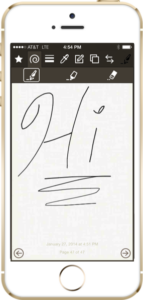
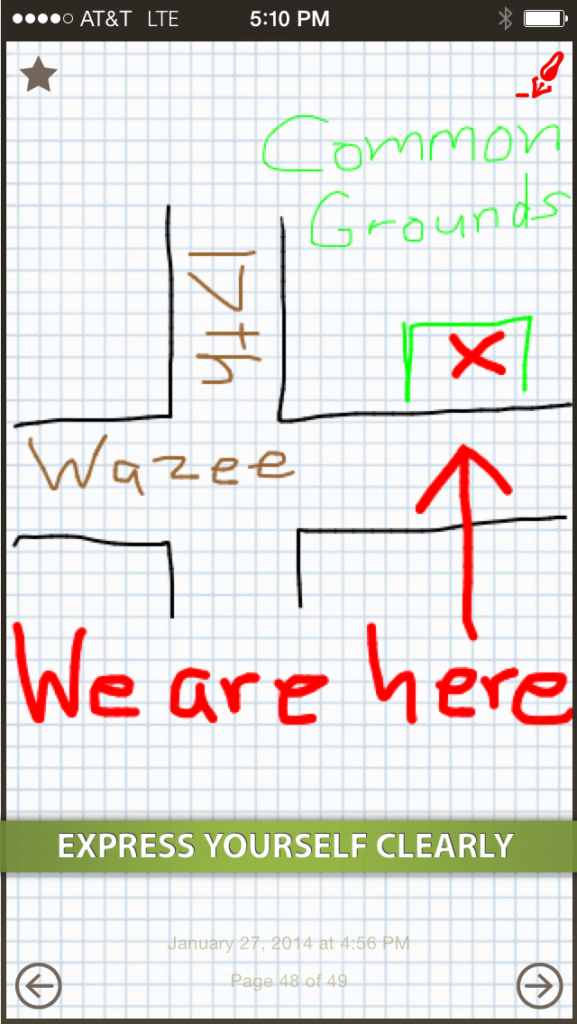
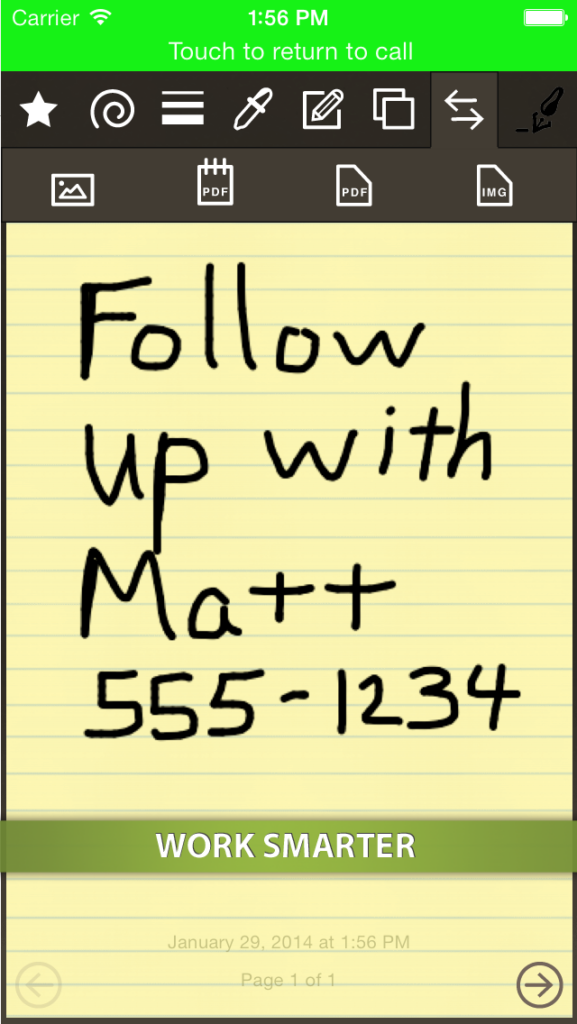
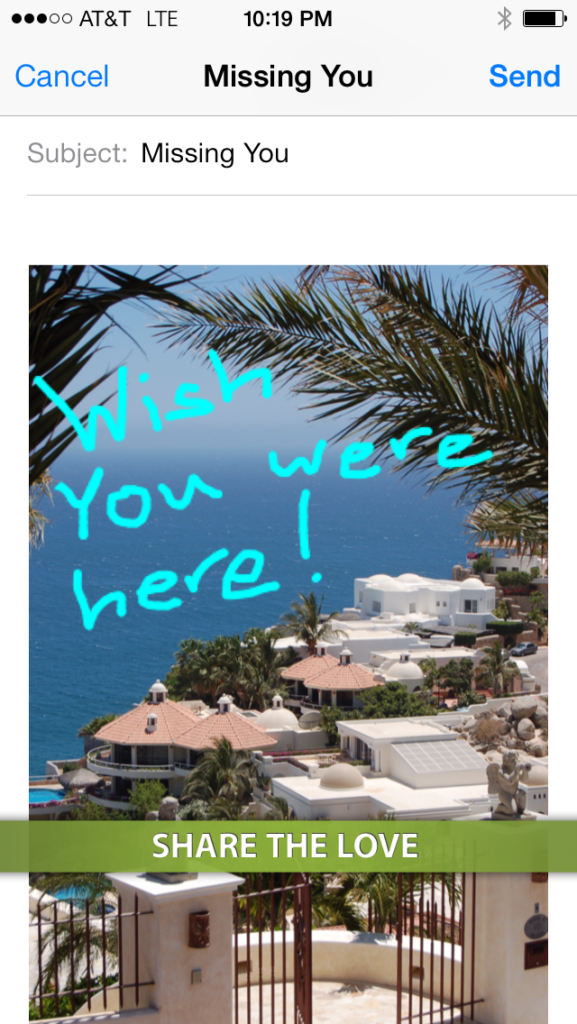
    Spiral is the perfect application for lovers of pocket-sized paper notepads who want to take quick notes, draw, sketch, doodle, and more! All these things can be done by simply “drawing” on the application with your finger or a stylus.

    Spiral uses a world-class drawing engine that provides smooth lines and a fluid writing experience. We worked very hard to make using Spiral feel like writing on an actual notepad, and we’re proud of what we built.

    Designed specifically for the smaller size of the iPhone, Spiral gives the power and features of notepad applications available only on the iPad in a way that works well on a smaller screen.

    Give Spiral a try today!

    Features

    Spiral offers the following features:

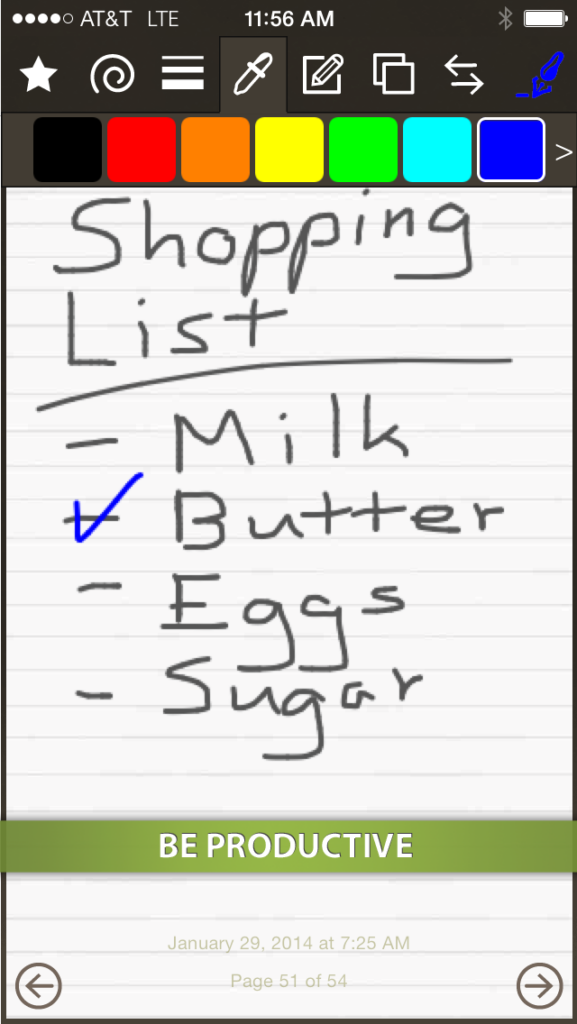
    • draw with pen, highlighter, and eraser drawing tools with enhanced effects to make writing with the app feel like writing on paper
    • write on unlimited pages
    • add a picture from the camera or photo library to a page
    • create a PDF of the entire notepad or just a single page of the notepad
    • email the notepad or a page
    • Text message the notepad or a page (iOS 6+)
    • save pages to the photo library
    • share pages on popular social media services such as Facebook and Twitter (iOS 6+)
    • print the notepad or a page via AirPrint
    • draw with multiple line sizes
    • draw with 13 colors
    • feel free to experiment with multi-level undo and redo
    • clear your drawing, background, or delete a page
    • rotate the contents of a drawing
    • make the app look how you like with five styles of paper and the option to use a plain white drawing surface
    • view an interactive tutorial that shows you how to use the application

    All of these features are available for less than the cost of a single hard-cover paper notepad.

    Give Spiral a try today!

    Download on the App Store
  • Why We Build What We Build

    No matter what you do, there is a great deal of pressure to do the popular thing. As creative professionals, we want to be appreciated. We want the work we do, the things that we create, to be acknowledged and appreciated. Professional, student, hobbyist, or whatever, we’re all people. And, really, we all want to be cool. We often won’t admit it, but we do. And because we want to be cool, we often look around at what our peers think is cool and orient our efforts and projects in that direction.

    Spotting a Gap

    This desire to be accepted isn’t necessarily a bad thing. From a business perspective, it can be an obvious compass for spotting where a potential market may be. All companies want a large audience. You can do a lot worse at finding a large audience than directing your attention toward the thing that seemingly everyone is talking about.

    But, does chasing popularity do a good job at filling market demand? Maybe. Even assuming it does, does an army of companies all chasing the same segment of users do anything for people who need an answer to a real, but very specific, problem? If everyone is exclusively trying to get on top of the coolest trend, do we as an industry just end up solving the same lowest-common-denominator problems in increasingly more sophisticated ways?

    A World Full of Photo Filters and Share Buttons

    Most of us are very aware of the draw social networks and photo sharing have been over the last few years. Seemingly every news-worthy application or service involved some angle on connecting us more thoroughly. And, on the face of it, there’s nothing wrong with that. As developers, we should pursue the endeavors we’re passionate about. If building a “Facebook for X” service get’s you excited and up in the morning, then great.

    But the expectation that developers need to focus on those application categories in order to be taken seriously can be tiring at times. Social networking is clearly a feature in high demand. But it’s also something that doesn’t necessarily excite me as a developer or product designer. The expectation that every new product needs to look and behave just like the current hot application can be a little discouraging.

    Take Robert Frost’s Advice, Consider the Road Less Travelled

    One of the reasons we started Digital Generalists was to give ourselves the freedom to pursue the projects we find interesting. All of us here at DG have had many opportunities to work on really wonderful products with some truly great companies. But eventually we all came to realize that to do the things we really wanted to do in the ways we wanted, we had to carve out a space of our own.

    That motivation is what guides the product strategy at Digital Generalists. We build products we would want to use, products which solve problems we’ve personally encountered, products we wish existed but simply don’t yet.

    We’re confident in our choice to build high-quality products that we are proud to put out into the world. If we consistently build things that we are passionate about, it’s our belief that a market will eventually follow.

    The things that become the new hotness rarely start as “me too” products targeting a well-established market. They often start because someone wished the world had something it didn’t at the time.

    If you like the vision I’m describing, take a look at the products and services we offer. You might find something you like there as well.
  • The Next Best Thing to Being There

    We received a big surprise a few days ago in our email.  The organizers at 360|iDev decided to release all of the video recording from this year’s conference for free.

    You can stream them from here.

    In years past, 360|Conferences have charged for the session recordings, so having them released for free this soon after the conference is a very cool thing.  If you couldn’t attend 360|iDev, couldn’t attend every session you wanted to, or simply want to review that awesome session that had just too much information to absorb the first time around, you now have a second chance.

    If you like the videos, spread the word around the web and be sure to give a big thanks to John and Nicole while you’re at it. Enjoy.

  • Children’s Medical Center WordPress Website

    Children’s Medical Center WordPress Website

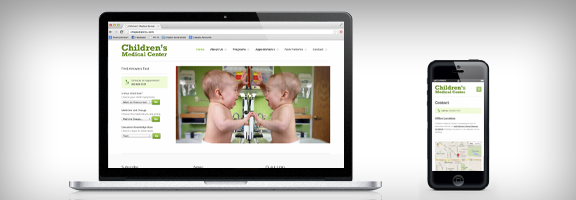
    Digital Generalists launched Children’s Medical Center’s redeveloped website today.  The new site, developed using WordPress, focuses on a crucial part of the relationship between a pediatrician and the patient’s family: communication.  Robust online resources are available to provide up-to-date, reviewed medical information 24/7 on any digital device.

    View the site: http://cmcpediatrics.com

    Prior to this project, Children’s Medical Center had an outdated website that its staff was unable to update without assistance from a third-party vendor. Digital Generalists worked with the pediatric practice to leverage WordPress and put the power back in the practice’s hands.  Patients and their families benefit from receiving current, timely information in a fresh new design.

    Project Goals

      • Focus on providing robust content for patient families
      • Migrate website infrastructure and capabilities to WordPress
      • Enable web tracking analytics
      • Add downloadable forms that users can type in before printing
      • Create initial social media presence

    Results

    The new website creates business efficiencies for Children’s Medical Center (CMC).  Because trustworthy medical information is now available on their pediatrician’s website, CMC patient families make fewer non-urgent calls to the practice’s phone line.  And with the use of online, fillable forms, patient families are showing up to appointments prepared. When less time is spent completing and reading paperwork in the pediatrician’s office, everyone benefits.

    Another substantive efficiency for the practice is the ability to make autonomous website updates without waiting for (or paying) a third-party vendor.  Digital Generalists worked with CMC’s staff throughout the project to ensure that they received adequate training and resources.

    Finally, because the practice chose to use a phased project approach, the new site was ready to release before its separate branding efforts were completed.  This provides CMC the opportunity to learn how its new content is being used through analytics and anecdotal feedback and apply this knowledge when selecting an eventual, more graphically complex, site design.

    Congratulations on launching your new website, Children’s Medical Center!

  • Hilltop House Sign Design

    Hilltop House Sign Design

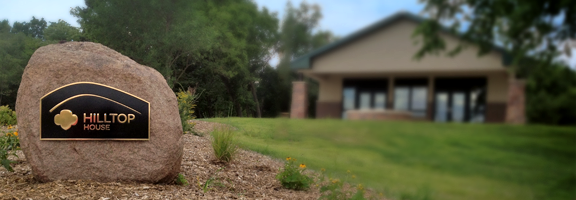
    Digital Generalists was proud to participate in Girl Scouts Spirit of Nebraska‘s project to create a day camp for girls in Lincoln, Nebraska. The completed project represents the joint work of two non-profits: Hilltop Foundation and the Girl Scouts.  We worked with the council to design outdoor signs throughout the camp that incorporate identity elements from both organizations brands: the familiar trefoil from the Girl Scouts and the arching hill from Hilltop Foundation.

    The first of these signs was unveiled to the public at Hilltop House’s opening ceremonies today. The bronze plaque is affixed to a fossilized boulder and is intended to stand for generations. This is quite a compliment to Digital Generalists’ design!  Additional signs will be used to mark trees in the camp’s arboretum, denote named trails, and mark discovery zones.

    Learn More about Hilltop House

    Congratulations Girl Scouts Spirit of Nebraska! Let’s have s’mores to celebrate.

  • Sacred Brand Guidelines

    Digital Generalists is working with a church whose history spans more than 150 years to solidify its brand. The goal of the project is to develop a set of communication guidelines that its staff and volunteer leadership can use to bring synergy to what is now a mismatched (and diluted) set of flyers, websites, and messages.

    First, we wanted to take a look at examples of how other sacred organizations have documented their brand. Here are just a few that we found:

    During this discovery period, we learned it was difficult to find examples of brand guidelines for large mainline, denominational churches.  Many use the branding of their denomination and do not craft an individual voice, such as is found with newer, non-denominational congregations. There are mainline, denominational churches out there with clearly defined brands; however, their guidelines are not easily found by non-members.

    Next, we found in the examples that we did uncover that the documents are written largely for communications professionals and not for easy use by lay church members.

    Finally, we did see that an important part of several sacred brands was defining the character and personality of the congregation. For example, Redemption Church is targeting a primarily male audience (not typical for most churches) and makes striking choices to support this decision. This seems to be even more important for a church to include in communications guidelines than a corporation. Churches’ members are seeing a match to their own beliefs and values (much more so than they would when selecting a bank or cereal) and want these to be reflected in the messages that their church produces.

    As we move forward in working with Trinity United Methodist Church to solidify its brand, we will be holding several focus groups with those staff and lay stakeholders who will be using the brand to determine how they see the brand currently being used, how they would like the church to be perceived, and (most importantly) who are the primary audiences of the church. Digital Generalists is looking forward to the collaboration.